Criminal Court

Behind the Bench: An In-Depth Look at the Criminal Court System

Introduction: The Guardian of Justice

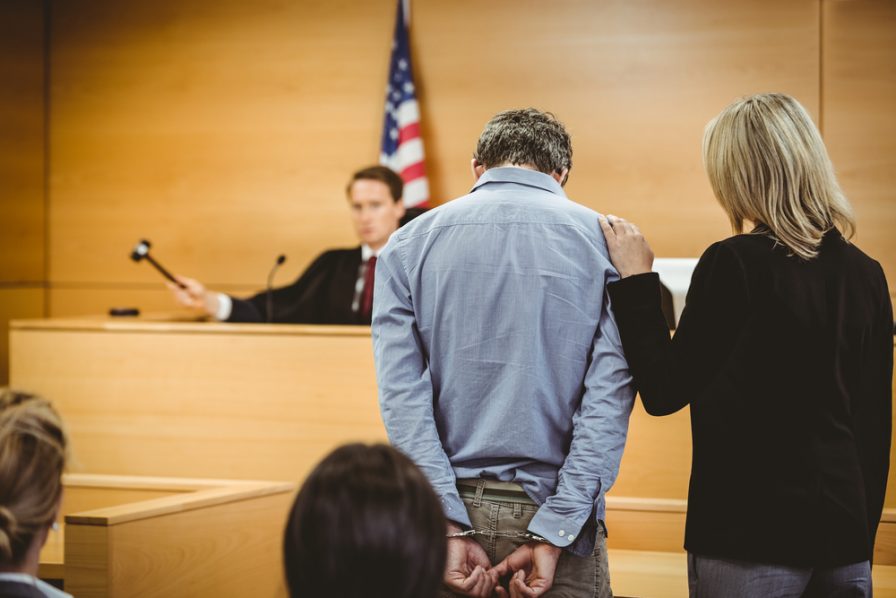
In any civilized society, the criminal court stands as a cornerstone of law and order. It is where allegations of wrongdoing are examined, where guilt or innocence is determined, and where justice is delivered with a solemn blend of authority and impartiality. The criminal court is not merely a venue for resolving disputes—it is the heartbeat of a democratic legal system, safeguarding the rights of the accused while upholding public safety. Though often dramatized in popular media, the true essence of criminal court lies in its methodical, measured procedures and its enduring commitment to fairness.

The Structure of the Criminal Court: A Hierarchy of Accountability

Criminal courts are typically organized into a hierarchical structure, allowing for the adjudication of cases based on their severity and complexity. This framework ensures that each case receives appropriate scrutiny and that higher courts can oversee and, if necessary, correct the decisions of lower ones.

  • Magistrate or Municipal Courts: These are entry-level courts where less serious criminal cases—often referred to as misdemeanors—are handled. They may also conduct preliminary hearings for more serious offenses.

  • Trial Courts (e.g., District or Circuit Courts): These courts have jurisdiction over felony cases and conduct full trials, with judges or juries determining the outcome.

  • Appellate Courts: If a party believes that a legal error occurred during the trial, the case can be reviewed by an appellate court. These courts do not retry cases but assess whether the law was applied correctly.

  • Supreme Court (State or National): As the highest judicial authority, the supreme court interprets constitutional questions and settles legal principles that affect broader society.

Each level of the court system plays a distinct role, yet all are bound by the principle of due process—a fundamental legal guarantee that every individual is entitled to fair treatment under the law.

The Players in the Courtroom: A Delicate Balance

The criminal court is home to a cast of key figures, each with a vital role in ensuring justice is served. The courtroom may appear adversarial, but its functioning is underpinned by mutual respect and a shared dedication to legal integrity.

  • The Judge: The impartial authority who ensures the trial proceeds according to law, rules on evidentiary matters, and, in non-jury trials, determines the verdict.

  • The Prosecutor: A public official who represents the state or government, tasked with proving the defendant’s guilt beyond a reasonable doubt.

  • The Defense Attorney: Whether privately hired or court-appointed, the defense lawyer’s role is to protect the accused’s rights, challenge the prosecution’s case, and advocate for acquittal or leniency.

  • The Defendant: The individual accused of committing a crime, who is presumed innocent until proven guilty.

  • The Jury (in applicable cases): A panel of citizens tasked with evaluating the evidence and determining the verdict based on the facts presented in court.

  • Court Clerks and Bailiffs: Administrative and security personnel who ensure the smooth and secure operation of the courtroom.

This balance of roles ensures that no single entity holds unchecked power, and that the adversarial process produces a well-examined and just outcome.

The Criminal Trial: A Journey from Accusation to Verdict

A criminal trial unfolds through a series of well-defined stages, each designed to uphold fairness and accuracy. From the moment charges are filed to the final pronouncement of judgment, every step is governed by procedural rigor.

  1. Arraignment: The defendant is formally presented with charges and asked to enter a plea. If the plea is not guilty, the case proceeds to trial.

  2. Pre-Trial Motions: Legal arguments are made to determine which evidence will be admissible and whether certain charges should be dismissed.

  3. Jury Selection (Voir Dire): If a jury trial is requested, a panel is chosen through careful questioning to ensure impartiality.

  4. Opening Statements: Both sides outline their cases, offering a roadmap of what they intend to prove.

  5. Presentation of Evidence: Witnesses are called, documents submitted, and expert testimony introduced. Each side has the opportunity to cross-examine the other’s witnesses.

  6. Closing Arguments: Final summaries are made to persuade the jury or judge before deliberation begins.

  7. Deliberation and Verdict: The jury (or judge in a bench trial) considers the evidence and reaches a verdict of guilty or not guilty.

  8. Sentencing (if convicted): The judge determines an appropriate punishment based on statutory guidelines, the nature of the offense, and mitigating or aggravating factors.

Throughout this process, the prosecution carries the burden of proof. The standard—“beyond a reasonable doubt”—is intentionally high, reflecting the gravity of criminal punishment and the moral imperative to avoid convicting the innocent.

Presumption of Innocence: The Golden Thread

Central to the criminal court system is the presumption of innocence. This principle, enshrined in law across democratic nations, holds that every individual is innocent until proven guilty. It is not merely a procedural formality, but a moral doctrine that places the burden of proof squarely on the state. This presumption demands that the court and society alike approach each defendant without prejudice, regardless of the nature of the accusation.

Challenges and Controversies: A System Under Scrutiny

No institution is without flaws, and the criminal court system is no exception. Issues such as wrongful convictions, racial disparities, excessive sentencing, and the influence of wealth on legal outcomes remain hotly debated. The plea bargaining system, while efficient, raises concerns about coerced admissions of guilt. Overcrowded dockets and underfunded public defense systems often mean that justice is delayed—or denied.

Reform advocates call for increased transparency, improved legal representation for the indigent, and more restorative justice practices that focus on rehabilitation rather than retribution. The evolution of the criminal court is not only possible but essential if the justice system is to fulfill its foundational promises.

Conclusion: The Living Symbol of Justice

The criminal court is not merely a room filled with robes, gavels, and solemn faces. It is a living symbol of society’s effort to define, enforce, and refine the meaning of justice. It embodies our collective belief in accountability, fairness, and the rule of law. While it may not be perfect, the court remains a powerful institution—one that must constantly be examined, challenged, and improved.

Ultimately, the strength of a criminal court lies not in its traditions, but in its adaptability. As society evolves, so must the mechanisms through which it upholds justice. And as long as we continue to value truth, fairness, and human dignity, the criminal court will remain not just relevant, but indispensable.

What is your reaction?

Excited
0
Happy
0
In Love
0
Not Sure
0
Silly
0

You may also like

Comments are closed.